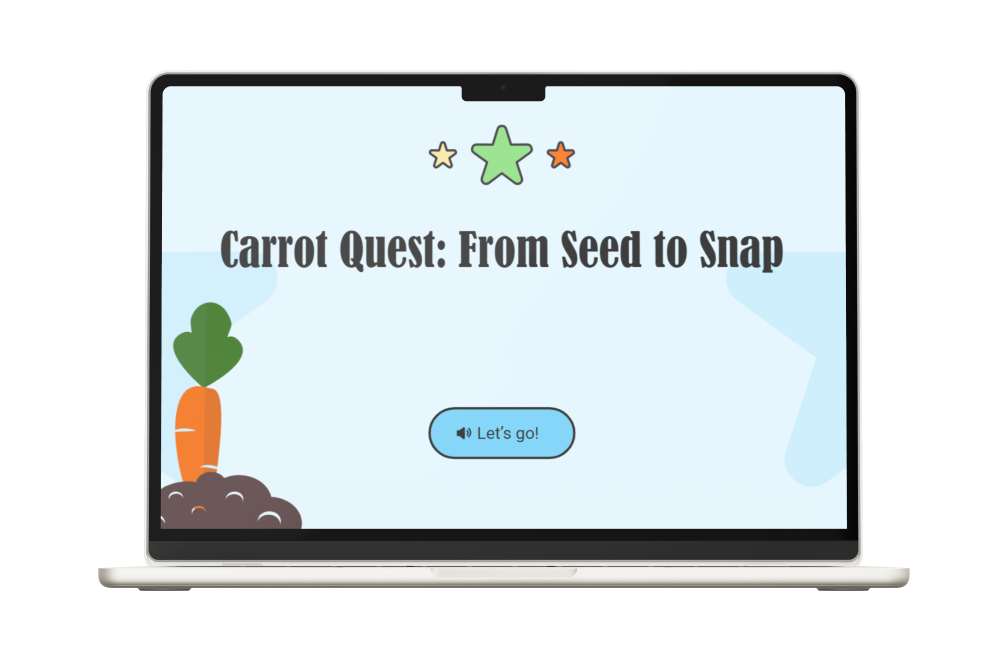
Carrot Quest: From Seed to Snap
Do you have the patience to grow a prize-winning crop?
This fast-paced simulation challenges you to manage a carrot patch under pressure. From soil prep to harvest, every second counts.
Audience: Beginner Home Gardeners
Responsibilities: Instructional Design (action mapping, storyboarding) and eLearning development (mockups, prototyping, full build, visual design)
Tools Used: Articulate Storyline 360, Canva, Adobe Photoshop, Figma, FreePik, Mindmeister, Google Docs
The Challenge
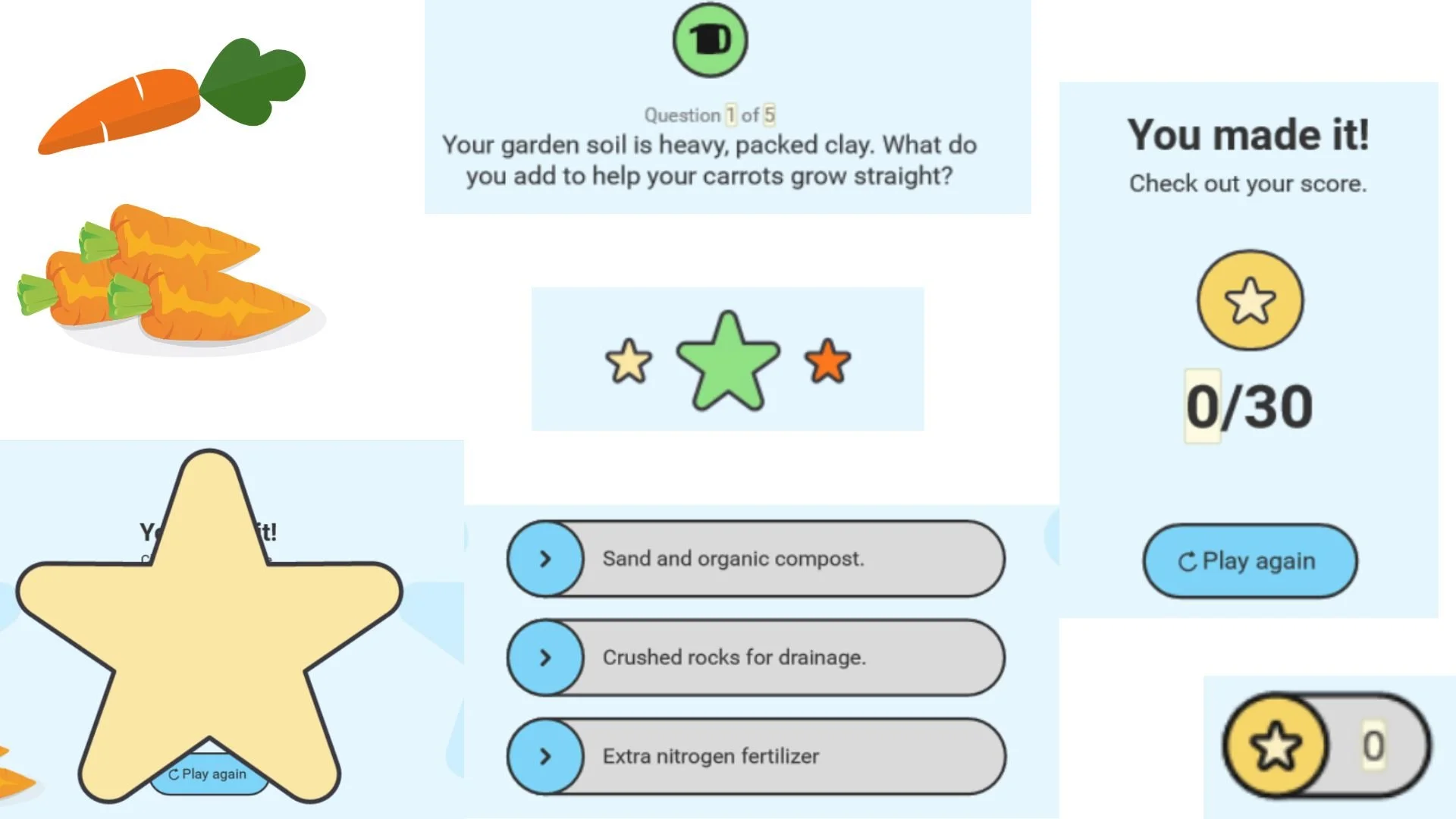
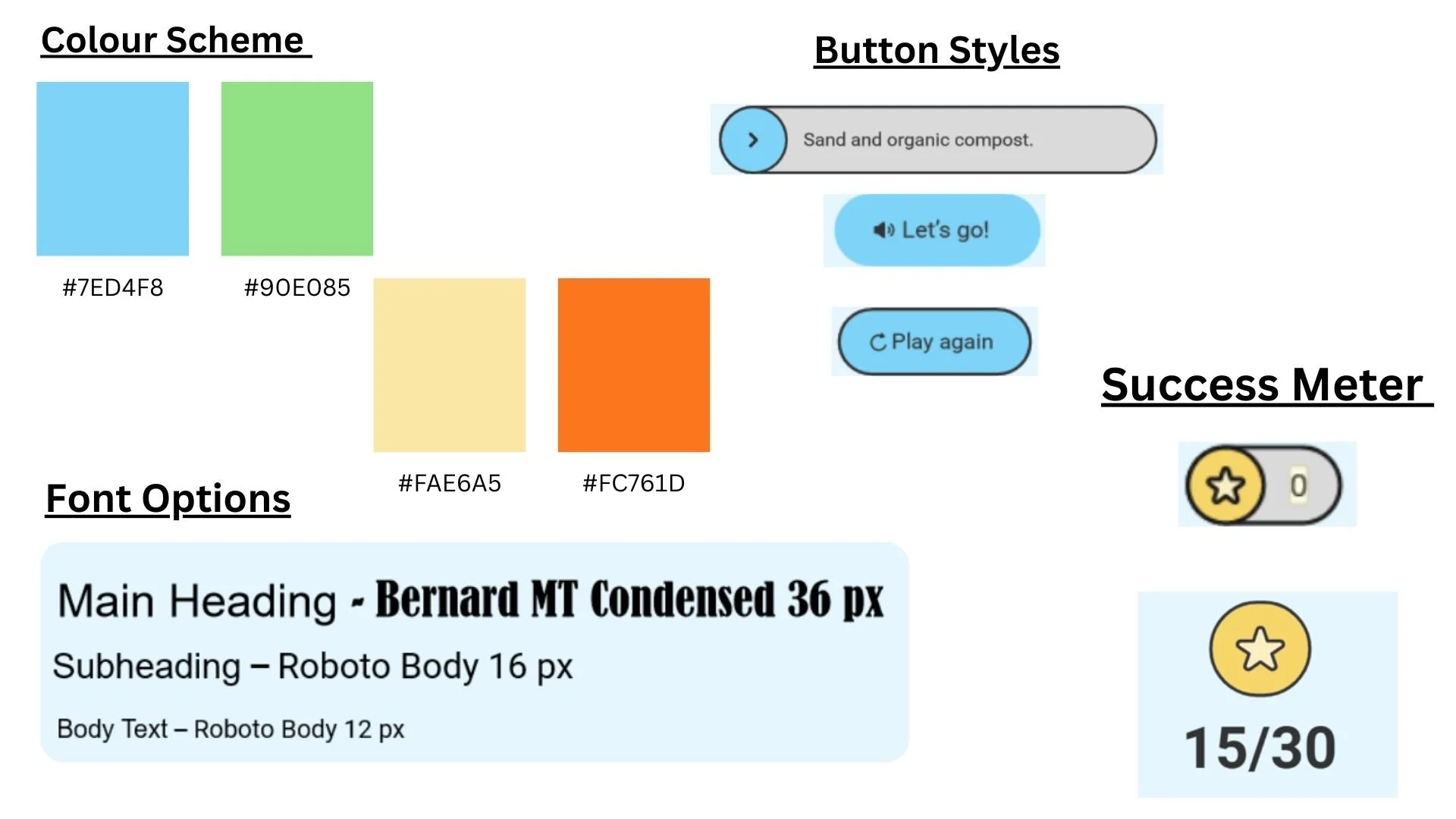
Mood Board & Style Guide
Gardening is often presented as a slow, relaxing hobby, but in reality, it is a race against pests, weather, and soil conditions. New gardeners frequently fail because they lack the ability to make time-sensitive decisions. I was tasked with creating a module that emphasizes rapid problem-solving while keeping the learner engaged.
The Solution
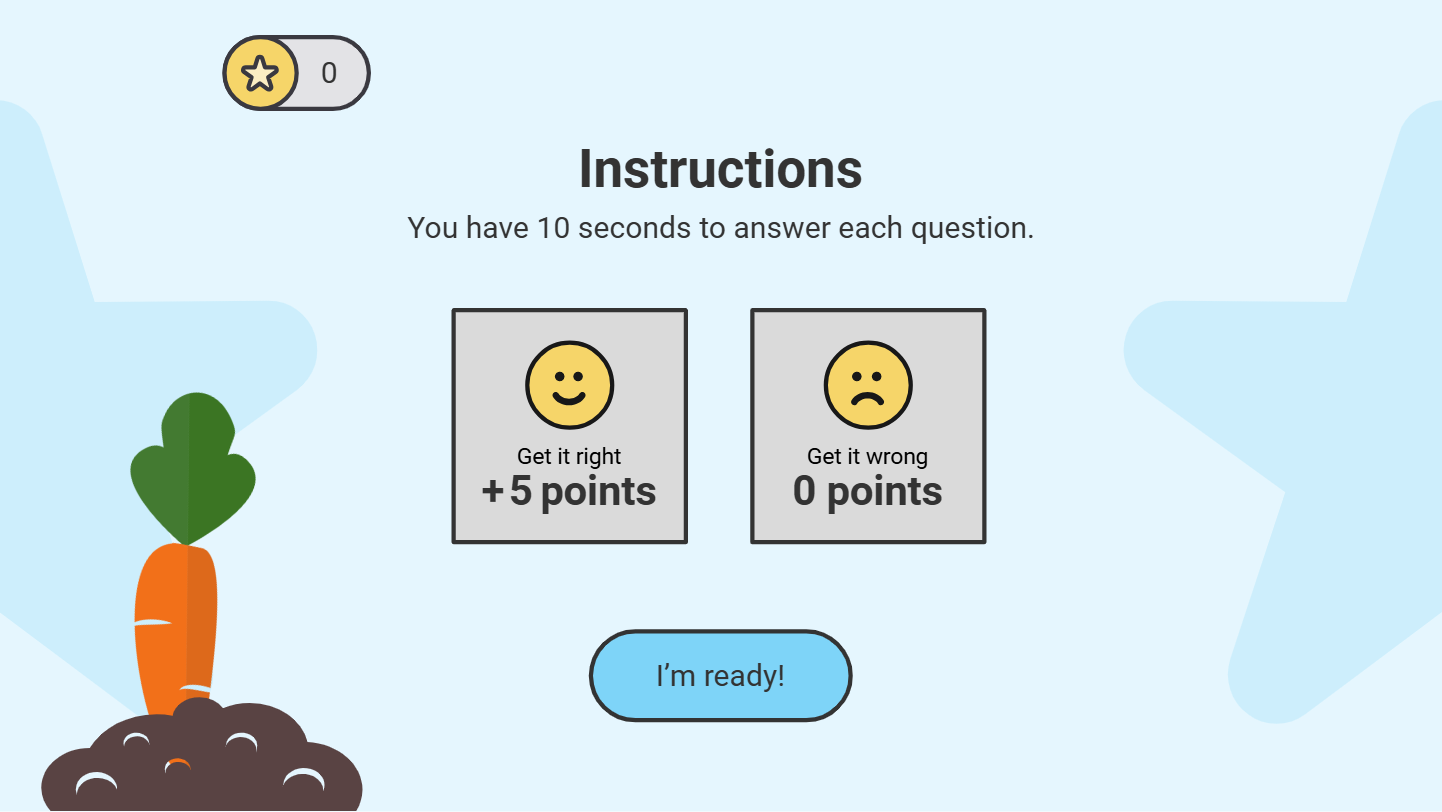
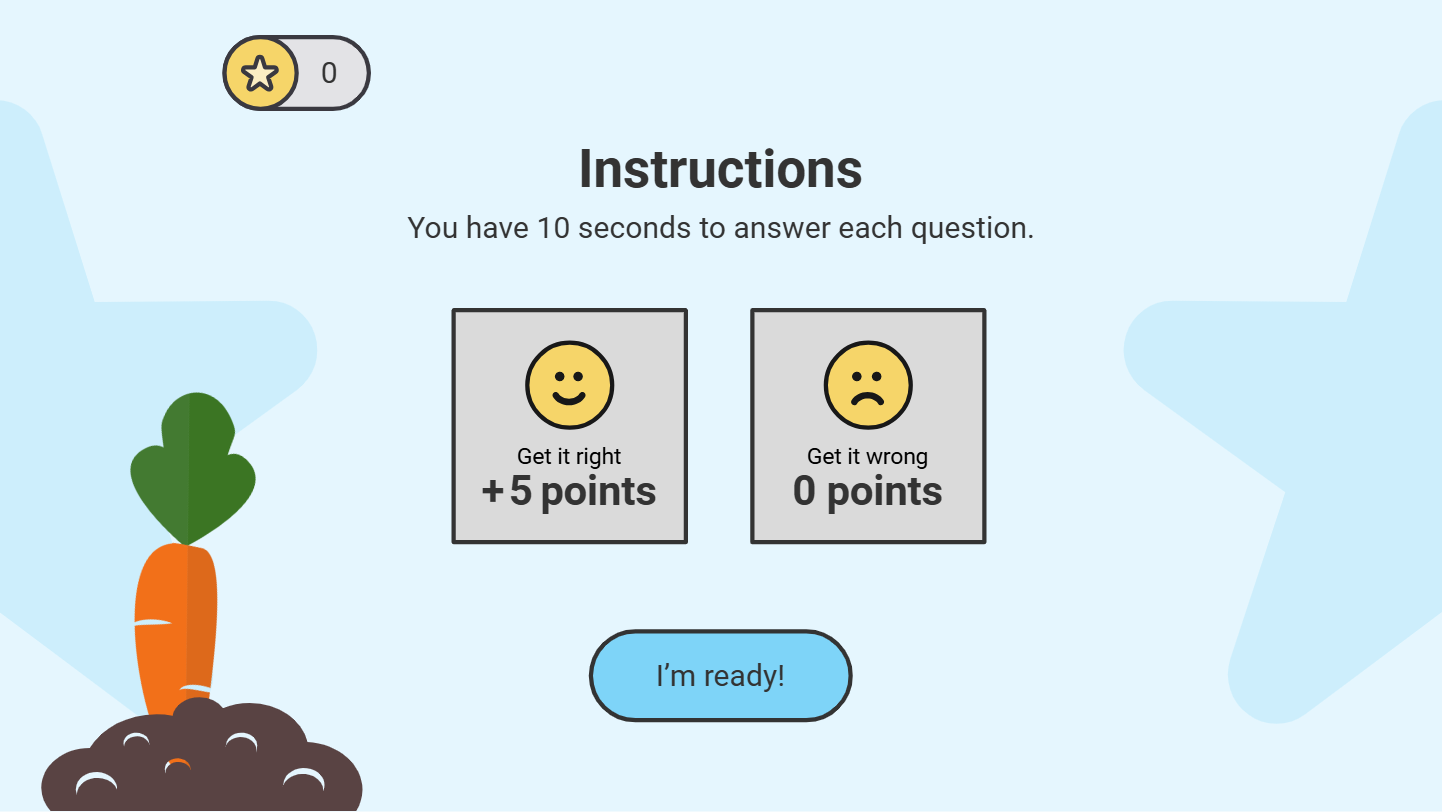
To make the learning stick, I transitioned from traditional slide-based content to a gamified, high-stakes simulation. By incorporating a 10-second countdown timer and a dynamic scoring system, I forced learners to rely on their intuition and newly acquired knowledge.
My Process
Instructions on how to play
I followed the ADDIE model to guide the project, beginning with action mapping in collaboration with a lifelong home gardener—my grandmother—who served as the SME (Subject Matter Expert). Using the insights from our 'garden-side' consultations, I translated her decades of hands-on experience into a structured text-based storyboard.
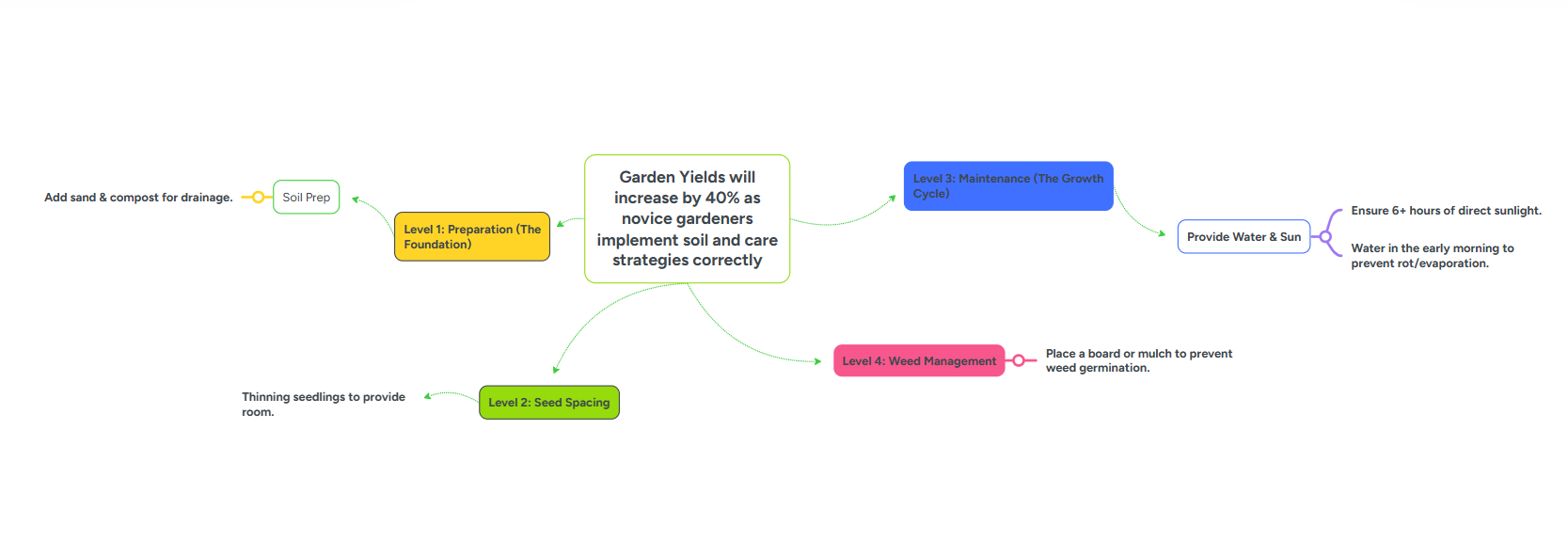
Text-Based Storyboard
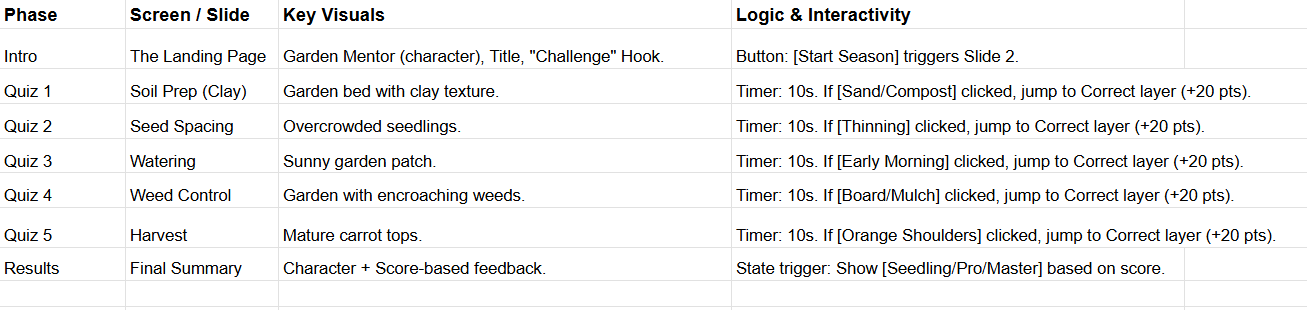
Once the action map was complete, I collaborated closely with my SME—my grandmother, a lifelong gardener—to refine the technical details for my text-based storyboard. This was a vital step in the process, as it served as the master blueprint for the design and development of Carrot Quest.
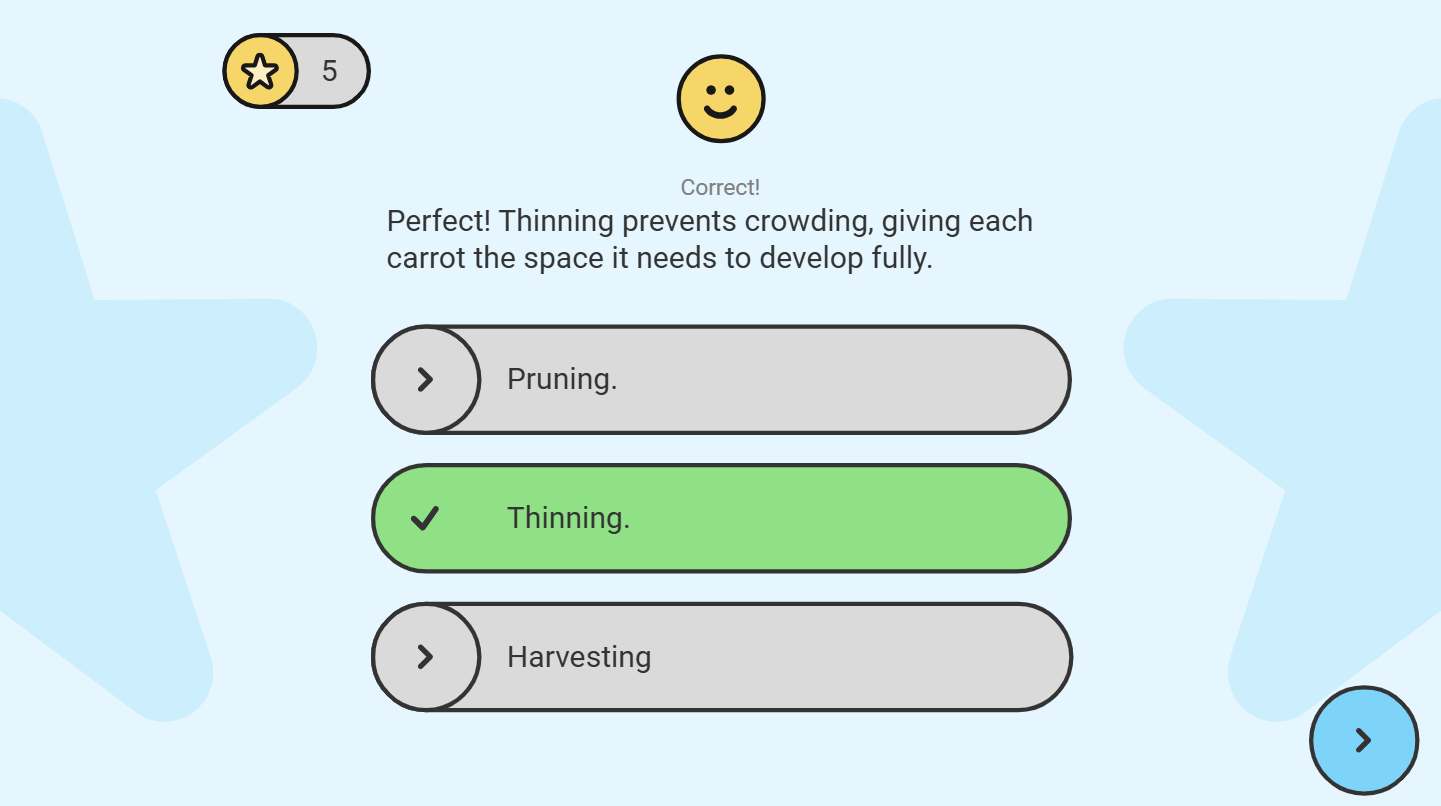
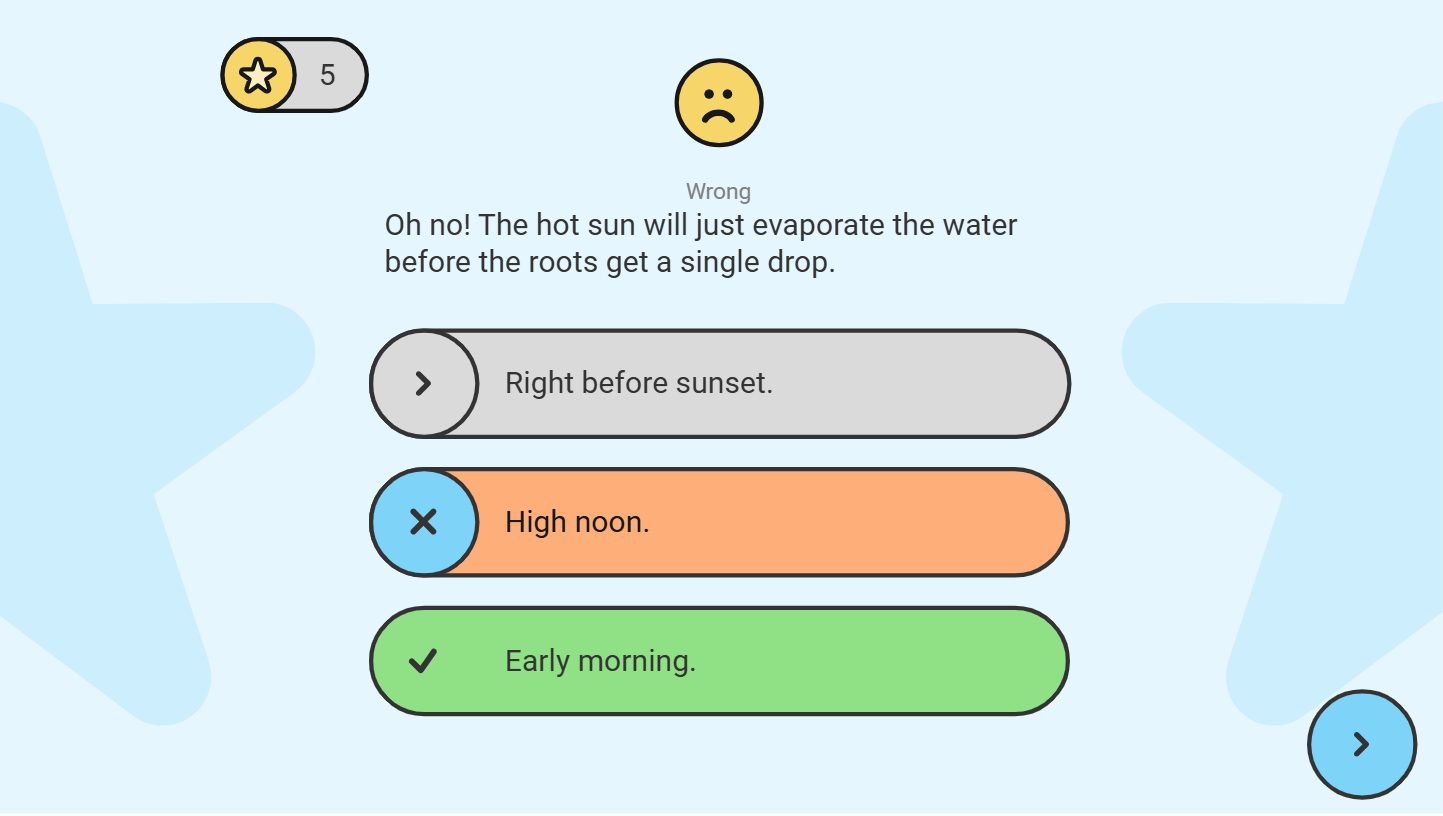
The storyboard was structured so that each quiz question represented a high-priority "make-or-break" decision in the garden. I worked alongside my SME to ensure that the actions and consequences modeled real-world agricultural challenges as closely as possible.
The narrative was written to immerse the user in the time-sensitive pressure of a growing season. If a learner chooses incorrectly—such as watering during the heat of the day or failing to thin the seedlings—they experience immediate, realistic consequences. To guide the learner through these high-stakes moments, I introduced a "Garden Mentor" character who provides on-demand tips and encouragement.
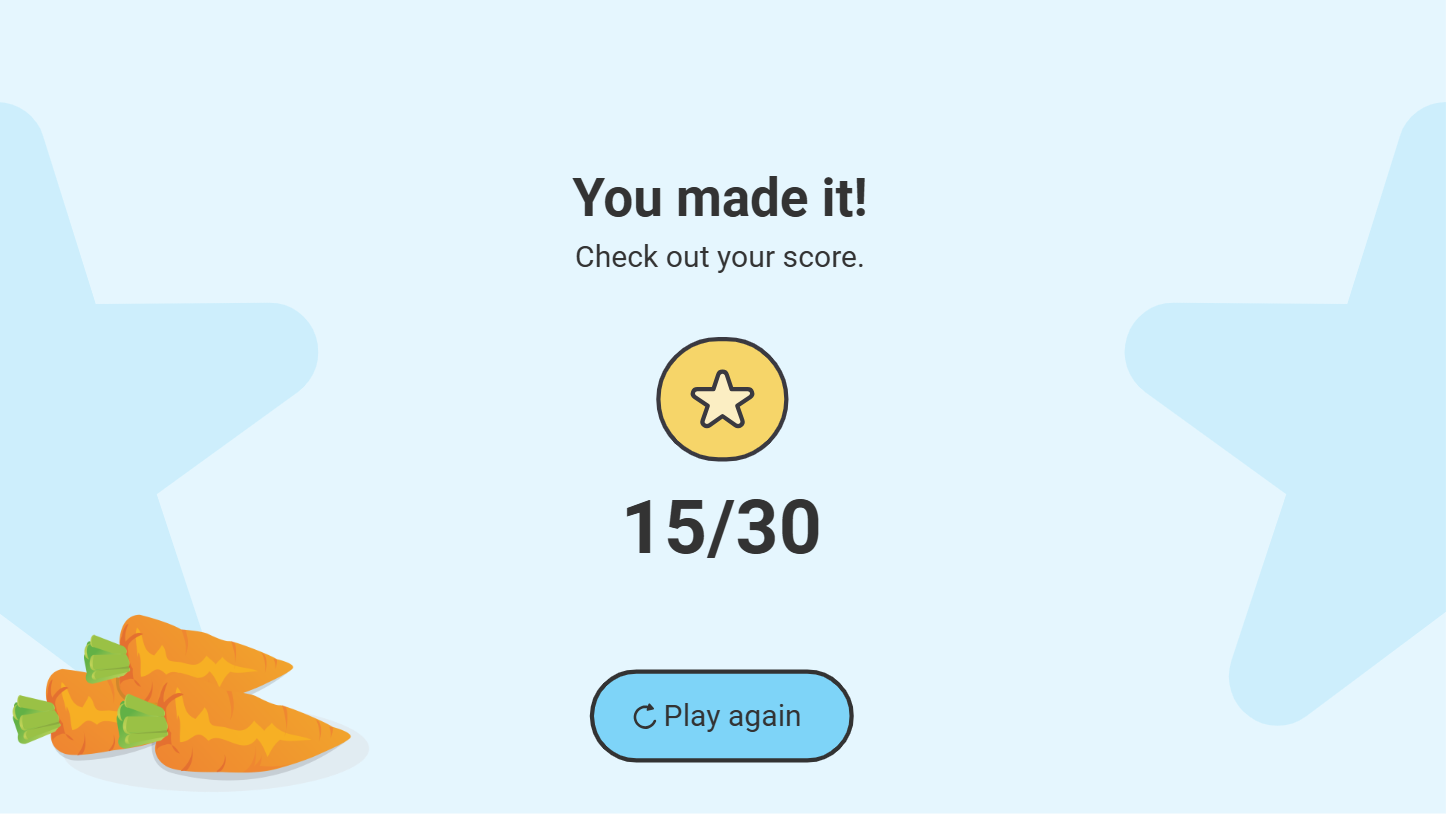
To further increase engagement, I integrated a "Harvest Gold" scoring system. Every correct decision adds points to the player’s total, and achieving a high score grants the player the title of "Master Gardener." This gamified component transforms what could be a static quiz into an interactive, high-speed simulation that rewards precision and quick thinking.
Visual Mockups & Wireframes
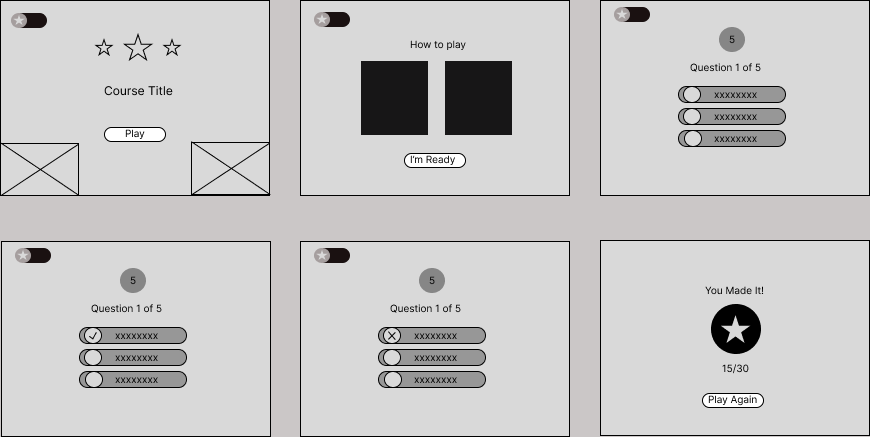
Following the finalization of the style guide, I developed wireframes to define the functional layout for each interaction type, including the Intro, Scenario, and Result slides. Using Figma, I rapidly iterated through multiple versions of these visual mockups, refining the spatial hierarchy, color application, and UI components to maximize both clarity and ease of use.
My design focus was on integrating thematic visual elements—such as custom icons, soil-texture backgrounds, and consistent typography—to bring the "Underground Goldmine" theme to life while reinforcing core learning concepts. Throughout this phase, I maintained a continuous feedback loop with my SME (my grandmother) to ensure that the visual representation of gardening techniques remained authentic and accurate.
I frequently cross-referenced my wireframes with the original text-based storyboard to ensure the interface stayed tightly aligned with the intended learner journey. This rigorous process allowed me to balance the "game-like" urgency of the 10-second timer with the professional accessibility required for a modern training module.
Full Development
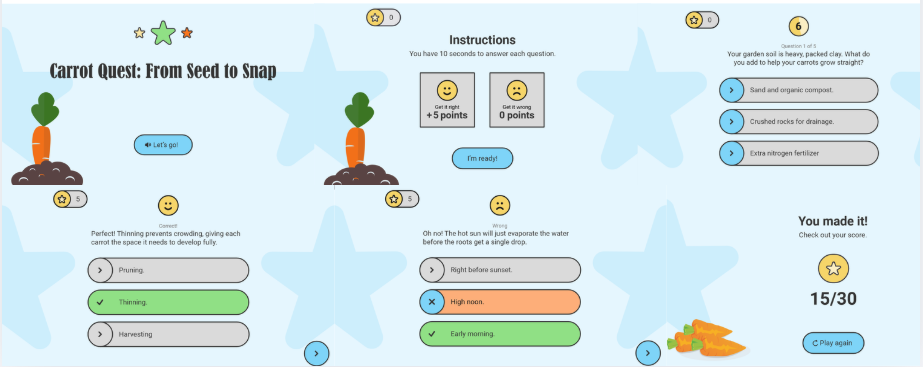
After refining the prototype based on iterative testing, I moved forward with full development in Articulate Storyline 360. The final product is a highly interactive simulation that balances technical gardening instruction with rapid-fire decision-making. Every scene was crafted to deliver an immersive experience that tests the learner’s ability to troubleshoot real-world gardening pitfalls under pressure.
Key Features
Custom Storytelling: I utilized a character-driven approach to bring the "Carrot Quest" journey to life. By centering the module around a "Garden Mentor," the simulation allows learners to step into the shoes of a novice grower, experiencing the challenges of soil health, pest management, and harvest timing in a low-risk, high-engagement environment.
Timed Interaction Mechanics: To simulate the urgency of the growing season, I implemented precision-timed decision points. These constraints force learners to rely on their newly acquired knowledge rather than passive reading, reinforcing retention through active recall.
Minimalist Sound Design: I curated a selection of subtle, natural soundscapes and feedback cues. This enhances the emotional impact and "crunch" of the gardening experience without creating cognitive overload, ensuring the learner stays focused on the critical decision-making task.
Gamification & Mastery: I integrated a "Harvest Gold" scoring system to reward accuracy. Learners earn "Master Gardener" status by successfully navigating the 5 critical stages of carrot growth. This mechanic provides immediate gratification and encourages repeat engagement, turning a standard quiz into a quest for perfection.
Results and Takeaways
To evaluate the effectiveness of this training, I applied Kirkpatrick’s Four Levels of Evaluation:
Level 1 (Reaction): I developed a survey using a Likert scale to gather qualitative data on the learner’s experience, focusing on the perceived value of the "10-second" challenge format.
Level 2 (Learning): I utilized the Storyline results slide to track knowledge gain, ensuring learners could identify the correct intervention for each gardening scenario.
Level 3 (Behavior): The training design ensures that learners can apply soil prep best practices in their own home gardens.
Level 4 (Results): The module successfully translates complex gardening theory into an intuitive, actionable framework, significantly reducing the "trial and error" time required for beginners to achieve their first successful harvest.