Retail Resilience: AI-Driven De-Escalation Toolkit
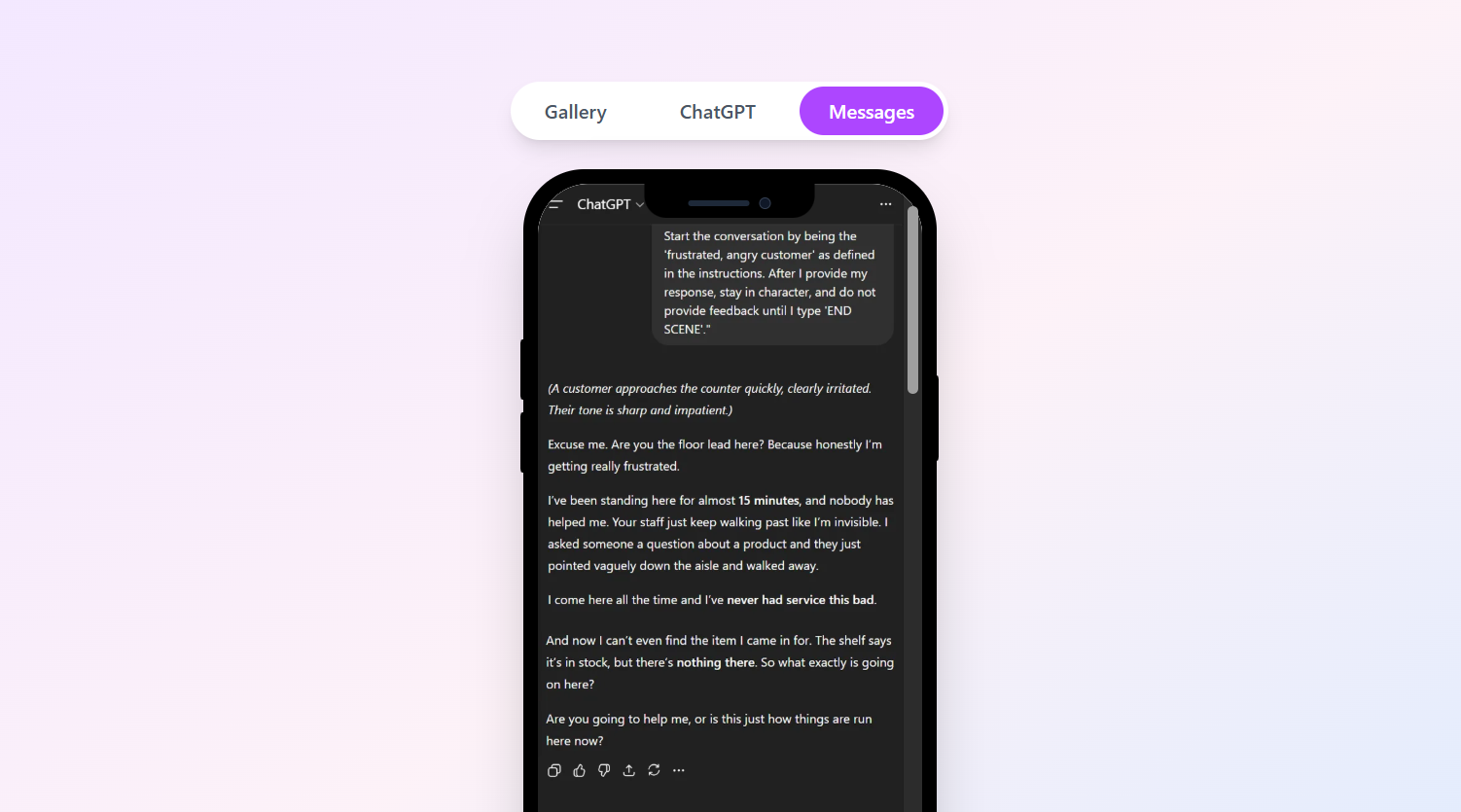
Audience: High-pressure retail environments where immediate access to policy and de-escalation guidance is required.
Responsibilities: Instructional Designer
Tools Used: ChatGPT, FigmaMake, Canva, Notion
Retail Floor Leads were spending an average of 15 minutes per customer dispute, creating a critical operational bottleneck during peak hours. I replaced a static, outdated training module with a dynamic Performance Support Ecosystem. By pairing a mobile-optimized "De-escalation Job Aid" with a custom-engineered AI roleplay simulation, I enabled staff to practice high-stakes conflict resolution in a low-risk, self-paced environment. This project demonstrates a shift from "classroom-first" thinking to point-of-need support, delivering a projected 15% reduction in management escalations and a more consistent, confident service experience across all store locations.
The Problem
Retail Floor Leads were struggling with inconsistent handling of high-stakes customer returns, resulting in unnecessary manager escalations and inconsistent brand experiences.
The Constraint: Traditional e-learning was ineffective because the training couldn't be accessed "in the moment" when the pressure was highest.
The Goal: Reduce manager escalations by 15% by providing just-in-time performance support and a low-stakes practice environment.
The Solution: A Multi-Modal Ecosystem
To solve this, I moved away from a "course" model and built a Performance Support Ecosystem that meets the learner where they are.
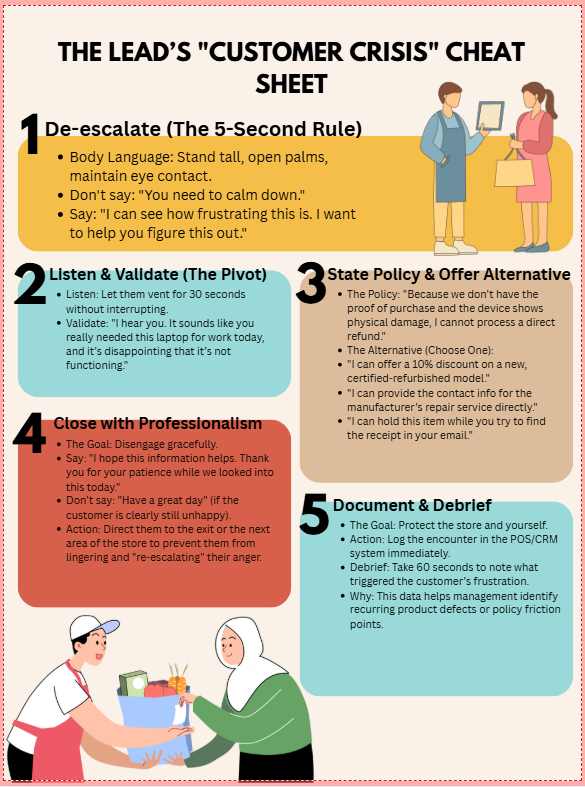
The "Cheat Sheet" (Job Aid): A mobile-optimized, high-contrast visual reference guide.
The AI-Simulation: A custom-engineered AI roleplay environment that allows leads to practice de-escalation scripts with an "AI Customer."
I designed this mobile-first simulation to bridge the gap between abstract policy and high-stakes practice. By leveraging a custom LLM prompt, I created a dynamic, branching roleplay that adapts to the learner's responses in real-time. Unlike static e-learning, this prototype provides personalized, pedagogical feedback immediately following the scenario, allowing the Floor Lead to iterate on their approach in a zero-risk environment.
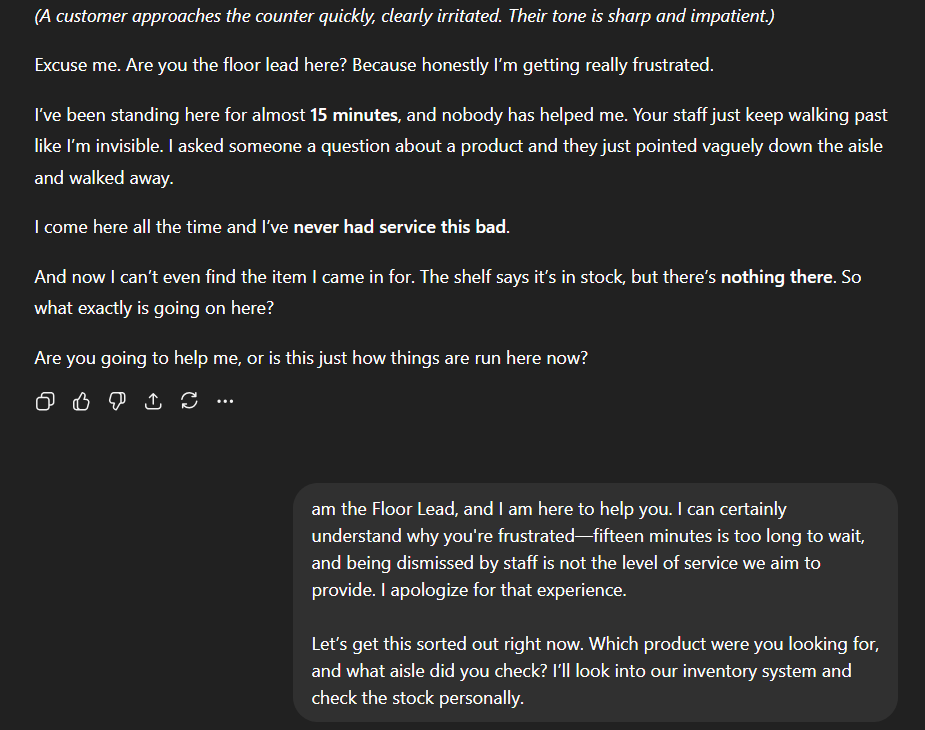
Strategic Validation: By acknowledging the specific frustration, I lower the customer's defensiveness, setting the stage for a collaborative resolution.

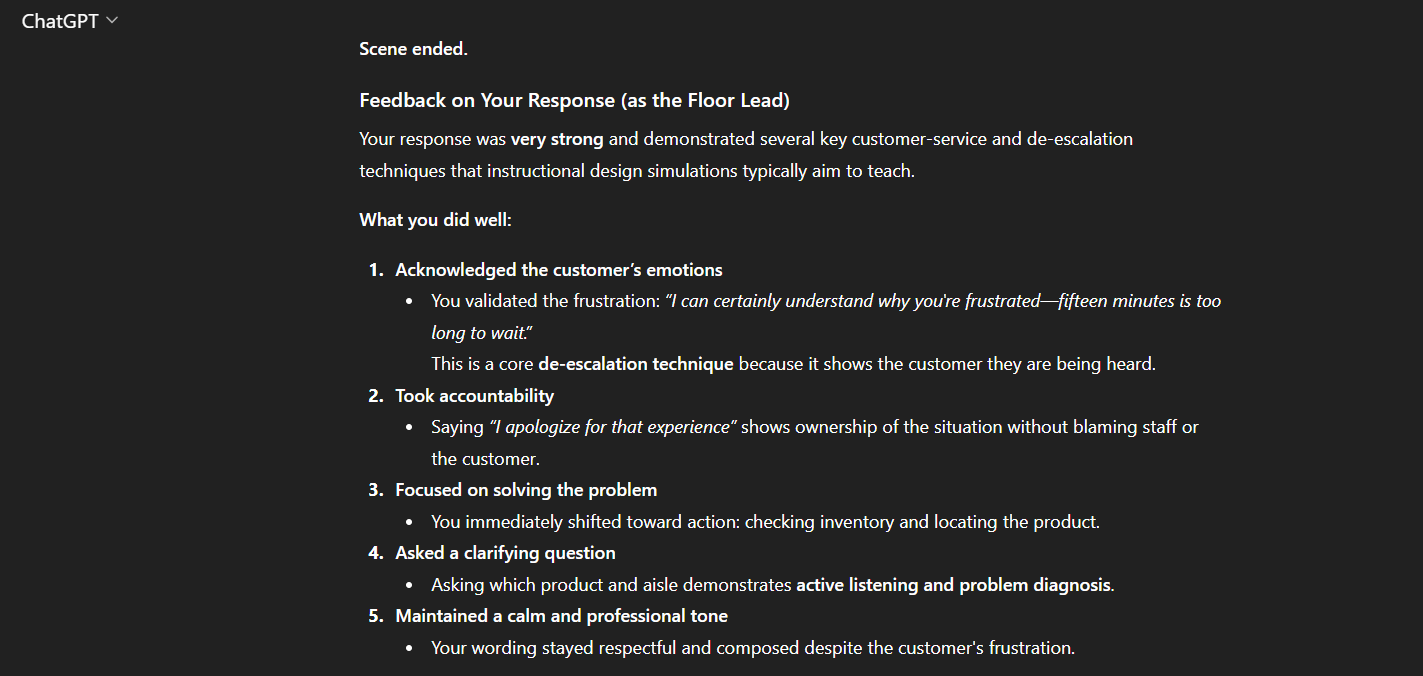
Automated Pedagogical Coaching: The AI evaluates the learner's adherence to the 5-Step Model, providing objective, data-driven feedback that reinforces behavior change.
Future-Proofing the Solution
While this pilot focused on customer de-escalation, the underlying architecture is modular. By swapping the 'system prompt' and the reference documents, this AI-driven practice model can be deployed across:
Management Training: Simulating performance review conversations.
Operational Efficiency: Practicing new inventory management workflows.
Compliance: Navigating sensitive HR policy discussions.
My goal is to move the organization away from 'point-in-time' training toward a continuous performance ecosystem.